Local Service Websites Hit by a Ranking Shock in July 2025
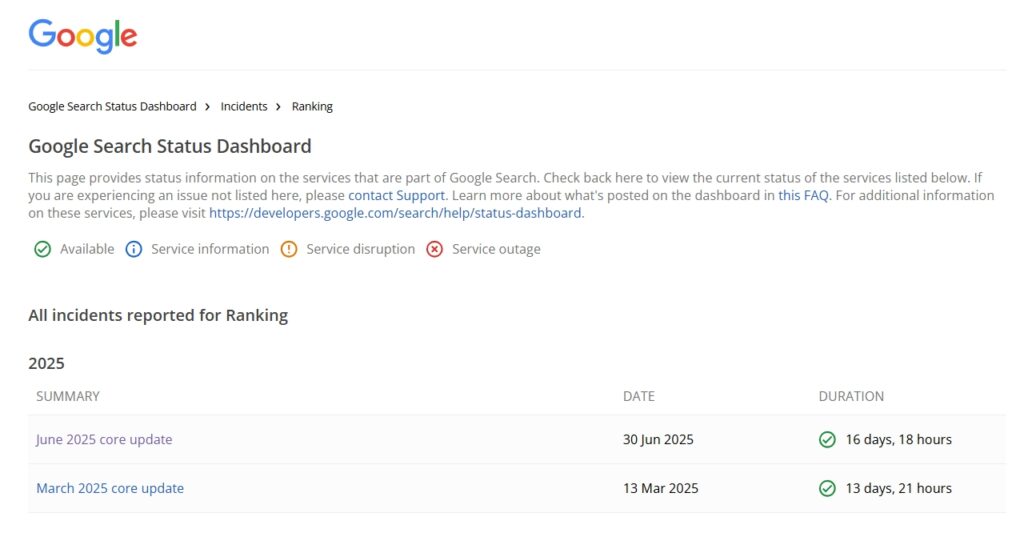
In the aftermath of Google’s June 2025 core algorithm update, many long-established local service websites (think plumbers, landscapers, and other small businesses) saw their rankings plummet overnight. These are sites that had long enjoyed stable Google visibility in their local markets, yet suddenly lost ground. Industry chatter and data analyses confirm that this broad core update – officially the June 2025 Core Update rolling out from June 30 into mid-July – coincided with dramatic drops in traffic for numerous local businesses. SEO monitoring tools like Semrush Position Tracking and Ahrefs reported above-average turbulence in search results during the rollout, especially across sensitive verticals like finance and local home services. In fact, some analysts noted that roughly 30% of keywords saw rank swings of over 5 positions during this update – a massive shake-up for sites dependent on search traffic.
What was striking for local business owners was seeing their trusted hometown sites outshone by larger, more content-rich or “authority” websites. For example, a local HVAC contractor might have been outranked by a national home improvement blog, a YouTube how-to video, or a high-authority directory page. This left many asking: What changed in Google’s algorithm to cause these local ranking crashes? The answer lies in a confluence of factors – from Google’s evolving quality criteria (E‑E‑A‑T) to the rise of AI-generated search overviews and the growth of zero-click searches that keep users from clicking through to websites at all.
Google’s June/July 2025 Core Updates and Why They Matter
Google releases core updates multiple times per year, but the June 2025 Core Update (which largely rolled out in early and mid July) has been especially impactful. According to Google, core updates are broad changes to how its ranking algorithms evaluate content, with the goal of elevating quality and relevance. This update was the second core update of 2025 (following a large March 2025 update) and was estimated to take about three weeks to fully deploy. Google’s guidance remained the same as ever: “there’s nothing special to do if you’ve been creating helpful, people-first content”. In practice, however, even well-established sites can see gains or losses after a core update as Google “recalibrates” its understanding of content quality.
Notably, recent core updates leading up to July 2025 set the stage for what we’re seeing now. For instance, the August 2024 core update explicitly rebalanced E‑E‑A‑T weighting, placing more emphasis on a website’s expertise, authority, and trust signals. The November 2024 update aimed to reduce low-value affiliate pages and thin content, while the March 2025 update (one of Google’s largest ever) further refined content evaluation signals like experience and trust. The June 2025 update continues this trajectory, doubling down on E‑E‑A‑T and content depth. Google’s algorithm now “directly targets content quality and user experience,” rewarding pages that demonstrate expertise and comprehensive value, and weeding out those that merely stuff keywords or offer shallow info. In short, the core update’s core goal was to boost the helpfulness, reliability, and user-centricity of results.
For local service sites, the implications are significant. Many of these small business websites had not been updated in months, years or were light on substantive content beyond basic service descriptions. Under Google’s new lens, some of these sites suddenly looked outdated or lacking in authority compared to content-rich competitors. Google’s own self-assessment questions (the ones it recommends site owners ask if hit by an update) hint at what changed:
- Is your content original and insightful?
- Does it demonstrate first-hand expertise?
- Does your page deliver on its headline’s promise?
- Does your site convey trust – with clear author info, credible sources, and reviews?
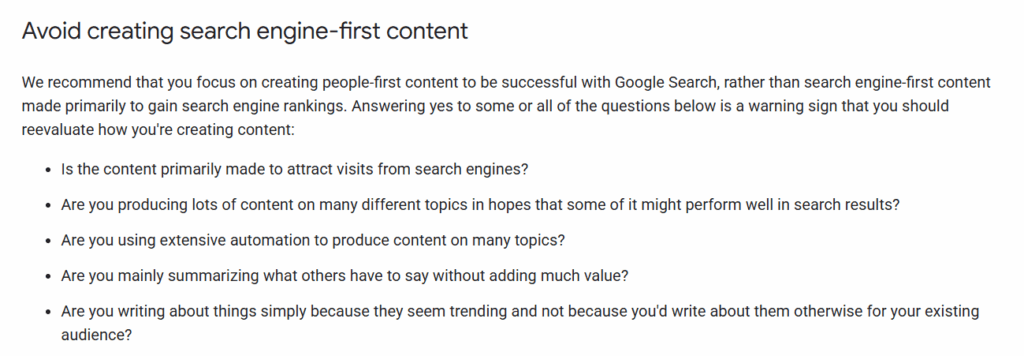
Sites that could not answer “yes” to these questions may have been re-evaluated downward by the algorithm, even if they previously ranked well.
The Rise of AI Overviews and Zero-Click Searches
One of the most talked-about shifts around mid-2025 is the emergence of AI Overviews (AIO) in Google search results – part of Google’s generative AI integration (formerly known as Search Generative Experience, SGE). This feature uses generative AI to produce a concise summary (with bullet points, images, or even product carousels) at the very top of the search results, attempting to answer the query directly. Importantly, these AI overviews pull content from across the web without requiring the user to click through to any particular site. Early research found that the pages chosen for these AI summaries often differ from the traditional top ten results – in one analysis, only 17% of AI-sourced pages were in the original top 10, while a whopping 66% came from beyond page one. Google seems to be using AI to surface a wider breadth of information (anticipating follow-up questions and niche info) right on the results page.
The advent of AI Overviews is contributing to an ever-growing phenomenon: zero-click searches. A zero-click search is when the user’s query is answered directly on Google’s results page, so no click to an external website is needed. This isn’t entirely new – featured snippets, knowledge panels, direct answer boxes, local packs, and “People Also Ask” boxes have been providing instant answers for years. But AI overviews take it to another level by synthesizing answers from multiple sources. As a result, fewer users may click through to the actual websites, especially for informational queries. Recent studies show that on desktop about 25% of Google searches result in no click, and on mobile the zero-click rate is even higher – one analysis by Semrush found as much as 57% of mobile searches end without an external click. Gartner has predicted that by 2026, traditional search engine traffic could drop by 25%, and brand websites’ organic traffic by 50% or more, as users increasingly get answers from AI and other SERP features without ever leaving Google.
From an SEO perspective, zero-click behavior means that even if you maintain rankings, you might see less traffic. For local service businesses, Google’s own features like the local pack (map and listings), Google Business Profile panels, and now AI-generated summaries of “the best X in [city]” can siphon off attention. Many searchers will find what they need (business phone numbers, reviews, directions, or a quick answer) without visiting the website. The July 2025 core update arrived in this context of rising zero-click searches, effectively amplifying an “informational bias” in the SERPs. Local service queries that used to return a list of company homepages are now more likely to show an AI-powered Q&A, video tutorials, or high-authority informational pages. For example, a query like “water heater leaking what to do” might trigger an AI Overview with step-by-step solutions or a YouTube video thumbnail, pushing the actual local plumber’s site further down or off the page.
Google has also increased the prominence of video and platform content in many result pages. It’s more common to see a carousel of YouTube videos, Facebook threads, or Google’s own “visual stories” for various queries post-update. Informational and how-to content (guides, FAQs, tutorials) from authoritative platforms is being favored, because Google senses that users want in-depth answers or demonstrations. For local businesses, this often means that to compete on the results page, they now have to compete with globally authoritative content or engaging media results, not just with the shop next door.
E‑E‑A‑T: Why Small Sites Lost Out to Big Players
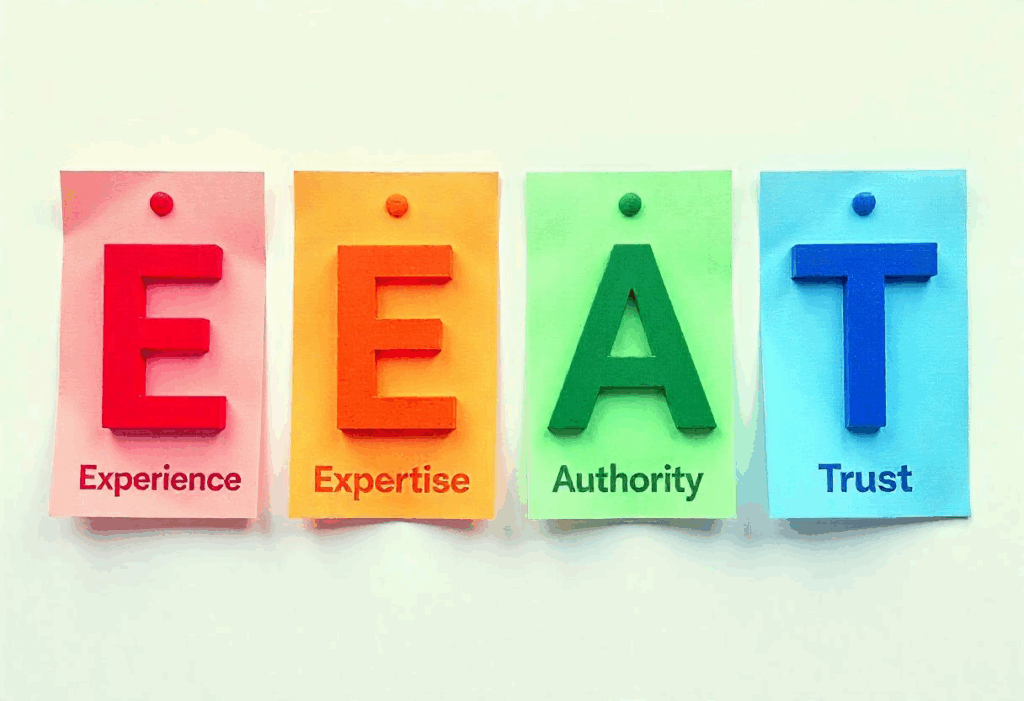
A defining theme of Google’s July 2025 update is the reinforced importance of E‑E‑A‑T: Experience, Expertise, Authoritativeness, and Trustworthiness. Google’s algorithms have become more discerning about who is providing the content and how credible that source is – especially for queries that fall under YMYL (Your Money or Your Life) categories, such as health, legal, financial, or safety-related information. In these areas, small business websites are being displaced by high-authority platforms that Google deems more trustworthy or comprehensive. For instance, a local financial advisor’s blog posts might drop while Investopedia or a major financial news site climbs; a small clinic’s health article could lose out to WebMD or a hospital website. Even in purely local contexts, Google seems to prefer content that demonstrates clear expertise and authority. The algorithm now “doubled down” on E‑E‑A‑T signals – sites offering first-hand experience, expert credentials, authoritative references, and genuine trust indicators saw ranking gains, whereas pages lacking clear authorship or factual credibility saw drops.
Concretely, this means credentials and trust markers matter more than ever. A long-standing local service site that used to rank on reputation alone may have gotten edged out by a site with more visible E‑E‑A‑T. For example, Google might favor a home services directory that has tons of user reviews, detailed business info, and updated articles on home maintenance (authority and fresh experience), over a small plumber’s 5-year-old one-page website with no author info or recent content. In medical and legal searches, Google’s quality raters (and by extension the algorithm) expect to see things like the author’s medical degree or law credentials, citations of reputable sources, and evidence of real-case experience. “Paper-thin” content or pages that read like mere sales pitches are being filtered out, in favor of content that demonstrates depth and trust. The core update explicitly strengthened “user experience” and “content depth” as ranking factors, continuing what one Chinese analyst called Google’s “EEAT 2.0 standard”.
It’s not just about on-page content either; off-page and site-level signals play a role. High-authority platforms typically have stronger backlink profiles, brand recognition, and user engagement metrics. Google’s updated algorithms might view a small site with few references and outdated design as less trustworthy compared to a platform that is widely cited and fast-performing. In fact, websites that previously got by with minimal link building or older SEO tactics may have been hit if they exhibited any hint of low-quality patterns. (Sites using manipulative tactics like link schemes or private blog networks saw further devaluation in this update.) The bottom line is that big, authoritative sites had an edge when Google reshuffled rankings according to strict quality metrics – and many small businesses found themselves suddenly outranked even for local-intent queries on their home turf.
One particularly painful example has been local businesses in YMYL fields (doctors, attorneys, financial consultants). These small sites might be extremely reputable in their community, but if their website lacked the explicit signals of authority Google now looks for – such as detailed “About the Team” pages with qualifications, media mentions or external references, consistent positive reviews, and up-to-date content – they were vulnerable. Google’s core update does not “target” small sites per se, but its criteria inherently favor those who can showcase institutional authority or robust expertise. As Google’s Search Liaison has explained in the past, a drop after a core update may not signal anything wrong with your site, but rather that content from other websites is now considered more useful. In July 2025, many local site owners learned that lesson the hard way.
Paused SEO Maintenance + Outdated Content = Disaster
Another major reason trusted local sites dropped is simply attrition and neglect. Quite a few small business websites have not kept up with SEO best practices in recent years – understandable, as owners focus on running their business. But paused SEO maintenance and stale content turned into a recipe for ranking disaster once Google’s new update rolled through. Sites that hadn’t been updated in a long time, or never adopted modern optimizations (like mobile-friendly design, fast load times, schema markup, etc.), suddenly found themselves losing to competitors that had been continuously improving. Google’s core updates often reward ongoing efforts to improve site quality. As SEO observer noted, “we’re seeing significant uplift on sites that doubled down on content clusters and cleaned up outdated posts earlier this year”. The inverse is also true: sites that sat stagnant were left behind.
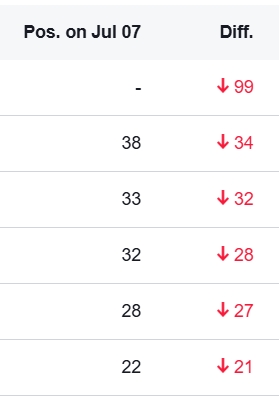
Outdated content in particular proved problematic. If your site still features a blog post from 2018 as “latest news” or has service pages with information that hasn’t been refreshed in years, Google’s algorithms may interpret that as a sign of lower relevance or less care for users. The July 2025 update placed greater weight on content freshness and depth. Pages that comprehensively cover a topic and are regularly updated to reflect current information signal to Google that they’re more likely to satisfy searchers. On the flip side, older content can expire in Google’s eyes, especially if competitors have since published more up-to-date material. Several local websites that experienced traffic drops realized they had thin or outdated sections on their site – perhaps a handful of generic 300-word pages describing each service, which hadn’t been expanded or improved in a long time. These simply couldn’t compete post-update.
Moreover, many small businesses paused active SEO work during the pandemic years or due to budget cuts, meaning fewer new backlinks, no new customer reviews being solicited, and little technical optimization. Google’s algorithms have a way of catching up with such lapses. For instance, accuracy of business information became crucial. Some analyses noted Google is giving lower visibility to businesses with errors or missing data in their name, address, or phone (NAP) details, treating those inconsistencies as trust issues. Even small mistakes – an old address still lingering on a page, or conflicting phone numbers across directories – can hurt local search rankings. If a business hasn’t audited its online presence recently, those issues might have compounded. Similarly, sites that never added HTTPS, schema markup, or that remain slow on mobile devices are effectively undermining user experience signals, which Google now prioritizes.
In summary, the July 2025 update was unforgiving to “sleepy” websites. A long track record in Google’s index did not guarantee future success – continuous improvement did. Local sites that rested on their laurels (relying on past reputation) were outranked by those that kept their content fresh, accurate, and engaging. It became clear that SEO is not a one-and-done job; a pause in maintenance can eventually lead to a freefall when the algorithm raises the bar.
The New Challenge: Regaining Visibility in an AI & Zero-Click World
For those local businesses now scrambling to recover, the challenge is twofold. First, they must regain their lost rankings or visibility by meeting Google’s updated criteria. Second, they must do so in a search landscape increasingly dominated by zero-click results, informational bias, and AI integrations that make getting clicks even harder than before. In other words, it’s not enough to just climb back to page one – you also have to entice users to click through when Google is often answering queries directly on-page.
This is admittedly a daunting task. Even once you address the issues on your site (more on recovery tactics below), you might find that traffic doesn’t bounce back to previous levels because user behavior has shifted. Searchers are interacting with SERP features – scrolling Google’s AI overview, glancing at the local pack, watching a snippet of a video, or refining their query – rather than immediately clicking the first organic link. AI Overviews now put key information at the immediate top of SERP, often reducing the need to click through – this is reshaping user behavior and, expectations. While it means faster answers, it also places pressure on individual site owners to ensure their content can still be seen, even if not clicked. In practice, that means your content needs to be the kind that gets featured in these new formats – or at least is compelling enough for the user to seek more detail on your site.
There’s also a trust and intent gap that businesses must overcome. Google’s bias toward authoritative, information-rich content implies that, to win back favor, local sites must present themselves almost like publishers or subject matter experts, not just service providers. For example, if a user searches a question related to your industry (“How often should I service my air conditioner?”), and Google’s AI or a competitor’s blog gives a quick answer, you need to ensure your site is the one providing the more detailed, trustable follow-up answer that motivates a click. You also need to capture those who do scroll past the instant answers – perhaps by having enticing page titles/meta descriptions, or unique value (like a free tool or local offer) that the SERP snippet alone can’t provide.
Additionally, local businesses face the reality that Google’s own properties can siphon traffic. The local pack with Google Maps, for instance, might fulfill a user’s need (they find your address or phone there). If you lost your spot in that local pack due to the update or lack of recent engagement, that’s a direct hit to your visibility. Similarly, if a large platform like Yelp now ranks above you organically with a list of top local providers, users might click that instead of your site – or worse, the AI overview might summarize content from that platform, giving the user an answer without clicking anywhere. All these scenarios mean recovery isn’t just “do SEO and get my old ranking back.” It’s adapting your whole content strategy to an environment where being visible often means being embedded in Google’s results (via snippets, structured data, etc.) rather than just being the #1 blue link.
In short, regaining visibility in 2025 requires fighting on two fronts: satisfying Google’s stricter algorithm criteria and adjusting to reduced click-through opportunities. It’s a challenge, but not impossible. Google’s updates, as harsh as they can be, also provide a roadmap of what the search giant values. The next section outlines tactical and strategic measures to align your site with those values and win back some of that lost ground.
5 Strategies to Recover and Adapt After the July 2025 Update
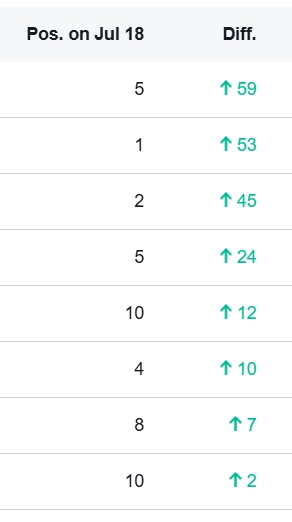
Recovering from a core update drop is never instantaneous – Google’s own advice is that true recovery often waits for the next core update once improvements are made. Nonetheless, there are concrete steps you can take now to start rebuilding your search presence. Here are five key tactics, both practical quick fixes and long-term strategic shifts, to help a local service site bounce back in the age of zero-click and AI-driven search:
1. Enhance E-E-A-T (Experience, Expertise, Authority, Trustworthiness)
Bolster every signal on your site that shows you are a credible expert in your field. This means updating your “About Us” page with real credentials, certifications, awards, and years of experience. Add author bylines and detailed bios to your blog articles (especially on any advice or YMYL content) to demonstrate who is behind the knowledge. Include customer testimonials, case studies, or media mentions to provide social proof. If your content makes claims, back them up with credible sources or data – citing industry research or official guidelines can help build trust.
E-E-A-T also extends to technical trust: ensure your site is secure (HTTPS), free of intrusive ads or pop-ups, and easy to navigate. Remember, Google’s update favors sites that earned their authority through genuine expertise and helpfulness. If you can demonstrate real-world experience (for example, a pest control company showing photos and notes from actual jobs solved – Experience) alongside your expertise (licenses, training – Expertise) and community trust (good reviews, BBB ratings – Trustworthiness), you stand a much better chance of Google viewing your site as authoritative once again.
E‑E‑A‑T optimization is critical for recovery – read our full E‑E‑A‑T guide.
2. Align Content with Search Intent (Especially Informational)
Re-assess the keywords and queries that matter to your business and ensure you have content that perfectly matches the intent behind those searches. The July 2025 update taught us that Google will favor content that fully answers the user’s query. For local businesses, this often means creating more informational and educational content to supplement your sales pages. If people frequently search questions related to your service (“How to maintain my gutters?” or “signs I need a new roof”), those are opportunities to publish helpful articles or FAQs on your site. Don’t let big content platforms monopolize those queries. By providing in-depth, locally flavored answers (perhaps “Top 5 Winter Gutter Maintenance Tips from a [Your City] Expert”), you can regain visibility and even get featured in snippets. Ensure each page’s content delivers on what the title promises – no bait-and-switch. If a page is about “Emergency Plumbing Fixes,” it should contain step-by-step solutions or advice, not just a pitch for your services.
Aligning with intent also means updating content format: if the intent is navigational (user wants your phone number or address), make sure that info is front and center on your site and marked up with the proper LocalBusiness schema. If the intent is commercial (comparing options), consider comparison charts or reviews on your site. By meeting users’ needs more precisely, you not only please the algorithm but also increase the chance that a user who does see your snippet will click through, because they perceive your content as the most relevant answer.
Featured snippets are being replaced by AIO for many queries, but local search results are more crucial than ever before. Here’s the full guide.
3. Embrace Multi-Format Content (Video, Images, and More)
Google’s SERPs in 2025 are rich with different media. To win back real estate, diversify your content beyond text. This might mean creating short video clips demonstrating your expertise (e.g. a 2-minute “How to reset your circuit breaker” video for an electrician’s site) and uploading them to YouTube – which can then appear in video carousels for relevant searches. It could involve producing infographics or step-by-step image guides (which might show up in image search results or be picked up by the AI overview). By offering content in multiple formats, you increase the chances of capturing attention in various SERP features. Importantly, multimedia content also feeds into E‑E‑A‑T: a well-made video of you solving a common problem showcases Experience and Expertise in a very tangible way. Google’s algorithms (and users) take note of these quality signals.
Additionally, consider integrating things like how-to schema or video object markup on your pages so Google can easily pull your media into rich results. A “multi-modal” SEO strategy can help you snatch traffic from new entry points – voice search, image search, etc. – which the update is increasingly catering to. For instance, a lot of “near me” searches are now voice-driven (“Hey Google, find a pizza place near me”). Make sure your content accounts for natural language queries and that your site is optimized for voice (conversational Q&A content, structured data). In short, think beyond the blue link: to recover, your brand should appear in videos, local listings, images, and more.
Learn how to optimize for rich-content AI Overviews to increase your chance of being cited in Google’s summaries.
4. Target Key SERP Features (Snippets, Local Pack, FAQs)
Rather than fighting the zero-click trend, work with it by aiming to occupy those zero-click positions. There are tactical steps to do this.
- For featured snippets: format some of your content to directly answer common questions in 40-60 words, use lists or tables where appropriate, and use question-based headings (which increases chances of getting a snippet or a spot in “People Also Ask”).
- For the local pack: ensure your Google Business Profile is thoroughly filled out and active – correct address, phone, hours, and category, plus recent photos and Google posts. Encourage happy customers to leave Google reviews, as high ratings and review count can influence your local pack ranking. If Google’s update shook up local pack results, regularly updating your GBP and responding to reviews can help you regain or secure a spot. Also consider the suggestion from SEO experts to leverage “Google Business Profile 3.0” features – basically using all available fields and even incorporating local event keywords in your updates.
- For FAQ and How-To rich results: add FAQ sections to your service pages addressing common client questions (“How fast can you arrive?”, “Do you offer free estimates?”, etc.) and mark them up with FAQ schema – this can earn you an expanded listing on the SERP, pushing competitors down.
The goal is to occupy more pixel space when your site does appear, increasing the likelihood of a click. While at it, don’t forget internal site search and site links – a clear site structure can lead Google to show sitelinks for your homepage, giving searchers more direct pathways to the info they want. By targeting SERP features, you make your site a proactive participant in the zero-click landscape, hopefully turning some of those no-click impressions into actual website visits.
For a step-by-step breakdown of featured snippets, local packs, and other zero-click strategies, see our zero-click optimization checklist.
5. Reinforce Content Freshness and Ongoing SEO Maintenance
Recovery isn’t a one-time project – it’s an ongoing commitment. Make a plan to update your site’s content regularly so it never falls into obsolescence again. This could mean a quarterly review of key pages to add new insights or current stats. One tip is for old articles, append 2025’s latest data or case studies to boost freshness. Demonstrating that your site is active and continually improving can help with both user engagement and algorithmic favor. Set up an editorial calendar for blogging about timely topics in your industry or local community events (Google loves fresh, relevant content, and this could also tie into local keyword opportunities).
On the maintenance side, regularly audit your site for technical issues: fix broken links, improve page speed (especially on mobile where users expect fast results), and ensure your site’s UX remains smooth. Keep your business information (NAP, services, pricing, etc.) up to date across your website and other directories – as noted, even minor inconsistencies can hurt local trust. Consistent SEO activity (publishing, optimizing, engaging with users) sends positive signals to Google.
It also prepares you for the future: Google’s helpful content system and core updates will continue to evolve, likely incorporating more AI and user feedback signals. By maintaining an active SEO regimen, you’ll be in a much stronger position the next time an algorithm change rolls out – in fact, you might benefit from it. Think of it as building immunity: every quality update you implement now (better content, better UX, better trust signals) immunizes your site a bit more against volatility. And if you do experience a dip, you’ll have the tools and processes in place to analyze and respond quickly. In essence, don’t go dormant again. Make SEO and content an integral part of your business operation, just like customer service or inventory management, so you’re never caught off-guard by an update.
See our full guide on content freshness here for a step-by-step workflow.
By executing on these strategies, a local service website can start to claw back rankings and even thrive in the new environment. It’s about demonstrating to Google – and your users – that your site deserves to be seen and clicked on. High-quality, intent-driven, trustworthy content is the currency here, along with smart optimization for how Google displays that content. While recovery might be gradual, each improvement lays a foundation for long-term SEO health. As Google itself emphasizes, focus on making your site truly valuable to users, and over time the rankings will follow.
Conclusion: Thriving Post-Update and Looking Forward
The July 2025 Google core update was a wake-up call for many SEO professionals and business owners. It underscored that the search landscape is not static – it’s rapidly evolving with AI, new SERP features, and ever-higher quality standards. Local service businesses that once relied on set-and-forget SEO tactics found that to survive (and ideally thrive), they must elevate their content and technical game. The playing field has tilted toward those who invest in expert, user-focused content and modern optimization. That said, the opportunity is there: by improving E‑E‑A‑T, aligning with user intent, leveraging multimedia, and targeting the way Google delivers answers, smaller sites can regain visibility. In fact, those that adapt quickly often come out stronger – offering better websites that not only rank well but also genuinely impress potential customers.
As we move forward, keep an eye on Google’s continued AI experiments (like further expansion of AI Overviews or even AI-driven modes in search) and user behavior trends. Gartner’s prediction of declining traditional search traffic might sound alarming, but it simply means SEO is shifting form. It’s not “dead”; it’s becoming more holistic – overlapping with content marketing, PR, UX, and product info. The savviest businesses will use this moment to not just recover, but reinvent their online presence to be the authoritative source in their niche, locally and beyond. That might mean more collaboration with industry experts for content, more engagement with customers for reviews and testimonials, and creative content strategies that go beyond a basic webpage.
In summary, the July 2025 core update taught us that SEO success comes from constant evolution. If your local site was knocked down, pick it back up with a fresh strategy that embraces the new realities of search. By enhancing credibility, serving user intent across formats, and staying active in optimization, you can navigate the zero-click, AI-influenced era of search and come out on top.
Remember: Focus on providing real value and trustworthy information to your audience – that is the North Star that even Google’s most sophisticated algorithms are ultimately guided by. Do that, and you won’t just recover your rankings; you’ll build a foundation for sustainable growth in organic search, whatever changes come next, even not from Google.
Sources:
- Google Search Liaison – “Today we released the June 2025 core update…” (Google Search Status Dashboard announcement)
- Vendasta Blog – Core Update timeline & guidance (March 2024 – August 2024 updates, E-E-A-T rebalancing, etc.)
- Uweb (Chinese analysis) – “Core update extends Google ‘EEAT 2.0’ standard, emphasizing user experience and content depth; simple keyword-stuffing pages will be eliminated.”
- WGenTech SEO – “Google is doubling down on E-E-A-T… Pages lacking author credentials, factual accuracy, or clarity may drop. Rise of AI Overviews and zero-click SERPs reducing traditional traffic.”
- GlobalSO (Chinese analysis) – “Under the AI Overview mechanism, content with E-E-A-T traits is more likely to be selected and cited, becoming a reliable basis to answer users’ questions.”
- Vocus (Happy Lee) – “Gartner predicts by 2026, traditional search engine traffic will drop 25%, and brand sites’ organic traffic 50% or more, as users get answers via AI agents… These zero-click search results (featured snippets, knowledge panels, local packs, AI overviews, etc.) mean users often don’t click any website.”
- Semrush Zero-Clicks Study (2022) – “Only 25% of searches do not result in a click” on desktop, while on mobile 57% of searches ended with no external click.
- WGenTech SEO – Early core update impact: “Semrush Sensor showed volatility spikes in Health, Finance, Shopping; MozCast saw turbulence in featured snippets and PAA; Sistrix confirmed big visibility swings”.
- Uweb (Chinese analysis) – Local & content tips: “Include team credentials, media mentions, and client testimonials to build trust (E-E-A-T). Optimize Google Business Profile (GBP 3.0) and incorporate local event/news keywords for local SEO. If traffic plunged, update old posts with 2025’s latest data to improve freshness.”
- Vendasta Blog – 8 Best Practices during rollout: “Audit and remove or rewrite thin/outdated posts. Strengthen local SEO signals (update citations, get new reviews, verify business info). Reinforce E-E-A-T with author credentials, credible sources, unique expertise.”